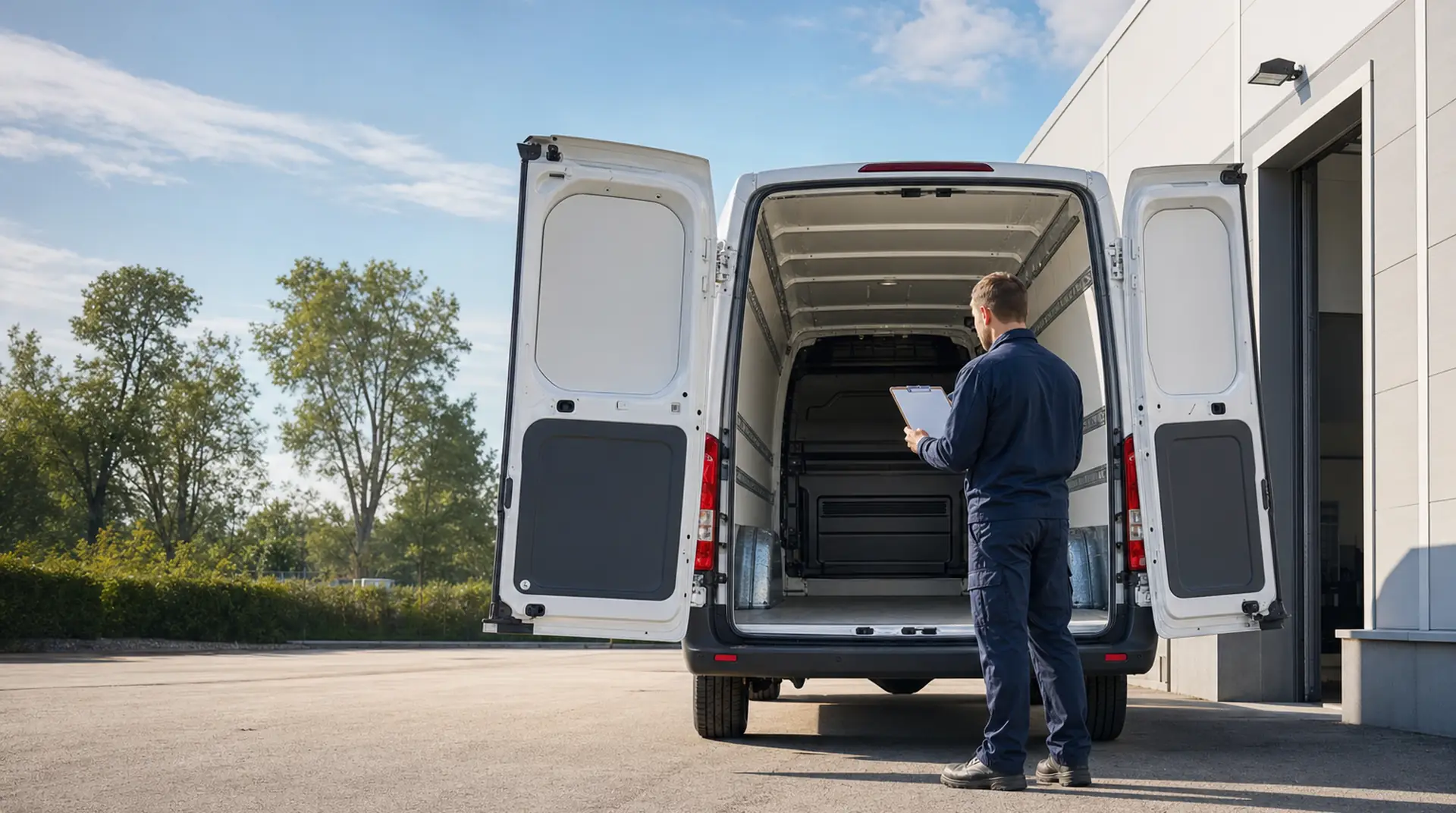
Most credentials sold to owner-operators do nothing for a cargo van. Three actually change what you get offered: a hazmat endorsement, a TWIC, and a TSA security threat assessment for air cargo. Each opens a specific kind of freight, each has a real cost, and the first question is always whether that freight exists in the lanes you run.
Which credentials actually change what you get offered?
The ones that gate access rather than signal competence. A dispatcher does not pay more because you hold a certificate; they call you because the load cannot legally go on a van without it. That distinction cuts the list down quickly and it is the only test worth applying.
By that test, the shortlist is hazmat, TWIC and an air-cargo security assessment. Everything else - defensive driving certificates, industry memberships, paid “carrier verified” badges - is optional, and none of it appears in a broker’s filter.
Do you need a hazmat endorsement in a cargo van?
It depends entirely on whether the load has to be placarded, and the answer surprises most van drivers. Under 49 CFR 383.5, a vehicle transporting hazardous materials in quantities requiring placards under 49 CFR part 172 subpart F is a commercial motor vehicle regardless of its weight - so a cargo van carrying a placardable load needs a CDL with the H endorsement, even though the same van needs neither for general freight.
Below placard thresholds the picture is different. There is no CDL requirement, but anyone whose job touches hazmat is a hazmat employee and needs training under 49 CFR part 172 subpart H, with records kept by the employer. Limited-quantity and small-package hazmat moves are a real niche for vans, and that training is what they require rather than an endorsement.
So the honest answer for most cargo van owner-operators: the endorsement is not the entry ticket you were sold, and the training might be. Confirm what a specific customer actually ships before spending anything.

Credentials in hand and your own MC?
StarBriges works with cargo van owner-operators who run under their own authority, nationwide. Send your MC and van details. We’ll review them within one business day.
Apply to run with StarBriges →What is a TWIC and when does it pay for itself?
A Transportation Worker Identification Credential is the TSA card that allows unescorted access to secure areas of regulated maritime facilities - ports, terminals and some intermodal yards. Without one you either wait for an escort or you do not get in.
It pays for itself if port freight is in your area and does not if it is not, and that is genuinely the whole calculation. Look at where your last three months of loads started and finished before you apply; the guide to how cargo van owner-operators find loads covers how to see what is actually moving near you.
What does air cargo work require?
Freight moving into or out of the air-cargo system is handled under TSA security programmes, and carriers working for freight forwarders and indirect air carriers are typically required to have drivers cleared through a security threat assessment. The requirement comes from the customer’s programme, not from a licence you buy in advance.
Practically, that means the sequence runs the other way round from what drivers expect: you find the air-freight customer, and they tell you which clearance their programme needs. Applying speculatively is the one case where the credential genuinely can be wasted money.
What about background checks and drug testing?
The federal drug and alcohol testing rules in 49 CFR part 382 apply to CDL drivers. A non-CDL cargo van owner-operator is outside that programme - which does not mean nobody will ask. Shippers in pharmaceutical, defence and high-value electronics routinely require enrolment in a testing consortium and a background check as a condition of the contract.
Treat those as customer requirements with a price attached, and price them the way you would any other cost of serving that account.
Which ones are not worth it?
- Anything bought before a customer asked for it. Credentials expire; freight patterns change faster.
- Paid directory listings and verification badges. They do not appear in the filters brokers search on.
- Equipment certifications for equipment you do not have. The equipment itself is the thing that gets you the load - our guide to what carriers require of your van covers what to buy instead.
Where to start
Look at the last ninety days of loads you were offered and turned down, and find the ones you could not take for a credential reason. If there are none, you do not have a credential problem - you have a freight-sourcing problem, and that is a different fix.
If you are still building the base, cargo van owner-operator requirements and the first 90 days come first, the rest of the owner-operator guides fill in around them, and running with us means someone else is matching your credentials to the freight.