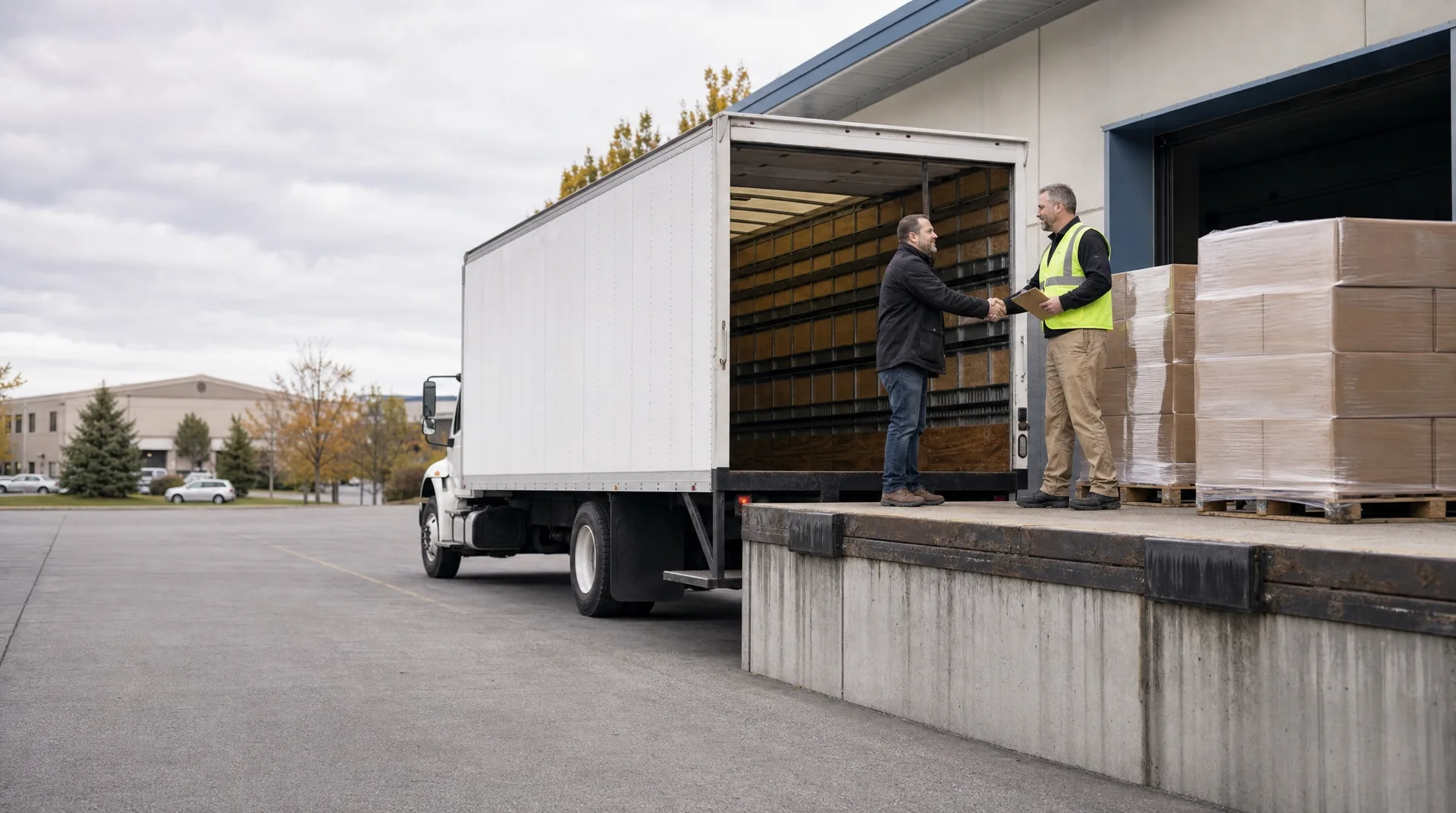
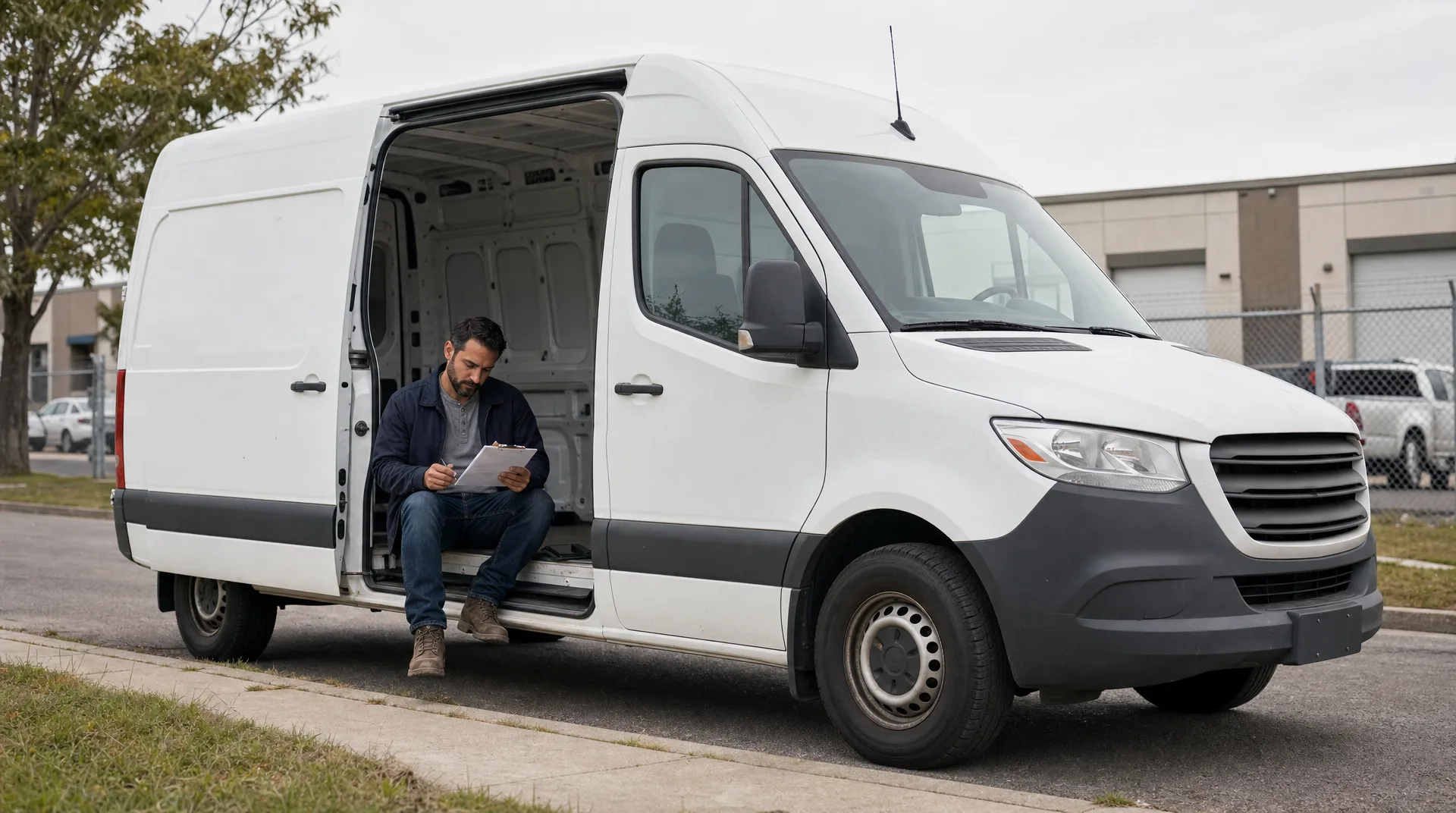
A box truck owner-operator job, when you run under your own MC, is an agreement with a carrier to put freight on your truck. Most of what separates a good offer from a bad one on a box truck is not the rate. It is whether the freight fits your weight class, your equipment and your insurance, and how the offer pays for stops and handling a van never deals with. This guide goes through those checks first, then the pay terms.
It is written for one reader: you own a box truck or a straight truck, your authority is active, and you are choosing who to run with.
Is the posting for your own MC, or for leasing on?
Job boards list “box truck owner operator” for both arrangements, so ask first. Leased on, you run under the carrier’s authority and the federal leasing rules decide much of what the lease has to say. With your own MC, you stay a carrier in your own right, and every term below has to be in your agreement or in the rate confirmation. The van guide walks through that difference in detail. If a posting asks you to give up your authority, it is a different offer from the one this guide covers.
Which rules does your truck fall under?
Ask a carrier which loads it books on your truck, and check the answer against your truck’s ratings, not against the posting. Two federal lines matter most for a box or straight truck, and both are set by the gross vehicle weight rating on the door jamb sticker:
- 10,001 pounds and over. In interstate commerce the truck is a commercial motor vehicle under 49 CFR 390.5. The driver needs a current medical examiner’s certificate under 49 CFR 391.41, and the federal minimum public liability for a for-hire carrier of general freight in this class is $750,000 under 49 CFR 387.9.
- 26,001 pounds and over. A single truck at this rating is a Group B heavy straight vehicle under 49 CFR 383.5, and driving it takes a commercial driver’s license. Some straight trucks are built just under this line for that reason, so check your own rating rather than the model name.
Then compare what the carrier books with what your truck can actually carry. Your payload is the rating minus the truck itself, the liftgate, fuel and anything mounted in the box. An offer built around loads near your payload limit leaves you no room on the day a shipper’s weight is wrong.
What does the offer expect from your box and your liftgate?
Van offers rarely ask about equipment beyond the cargo area. Box truck offers often depend on it. Ask:
- Is a liftgate required, and what capacity and platform size do the loads need?
- What box length and door type does the carrier expect, and do loads need a pallet jack, straps or load bars on board?
- How many deliveries go to places with no dock, such as stores, job sites or event venues, where the liftgate does the unloading?
- Is liftgate, inside delivery or residential delivery paid when the load needs it, and how do you claim it?
If you have no liftgate, ask what share of the freight you would lose. That number tells you whether the offer is really for your truck. On a box truck, have the box length, door opening, liftgate capacity and payload written down before the first call.

Own your truck and your MC?
StarBriges works with cargo van, Sprinter, box truck and straight truck owner-operators who run under their own authority. Send us your MC and truck details. We’ll review them within one business day.
Apply to run with StarBriges →What insurance does the agreement require?
The federal minimum is the floor, not the answer. Carrier agreements and shippers can ask for higher liability limits, cargo coverage at a set amount, and to be named on your certificate. On a box truck the cargo limit matters more than on a van, because a full box of retail or trade show freight can be worth more than a typical cargo policy covers.
Get the required liability limit, cargo limit and any other coverage in writing before you buy or change a policy, and ask what happens to loads above your cargo limit. The amounts for a box or straight truck come from your agreement.
How does the offer pay for a box truck day?
Box truck work can mean shorter runs with more stops and more time at each one. An offer that looks strong per mile can pay little on a day of four deliveries in one metro area. Ask how each of these is paid:
- Per mile, a percentage of the load, or flat per load, and whether empty miles count.
- Extra stops on a multi-stop load.
- Waiting time at a pickup or delivery, and from which point it starts.
- Handling: liftgate, inside delivery, and loads you have to load or unload yourself.
Then put every offer through the same test: total pay for a typical week divided by every mile you drove, against your own cost per mile. A box truck usually costs more per mile than a van, so the same rate tends to leave less.
Can you turn a load down, and when are you paid?
Ask whether dispatch is forced or non-forced, and what actually happens after you decline a load. A load you cannot refuse is a load you cannot price. StarBriges runs non-forced loads.
Then ask how often you are paid, how many days after delivery, and which documents start the clock. A box truck usually burns more fuel than a van before a load pays, so the wait costs more. At StarBriges payments are weekly direct deposits. Faster options such as quick pay and factoring have their own costs. Ask for a sample settlement sheet too, and read every line that is not a load.
What freight and lanes come with the offer?
Box and straight truck work is often fewer, larger loads than van work, so the type of freight goes a long way toward deciding how full your week is. Ask what the carrier moves most on your class of truck, whether it is pallets to stores, equipment to job sites, exhibits to shows or parts to plants, and how steady that freight is across the year.
Then ask where the loads start and end, how often a load leaves you somewhere with nothing back, and whether you can set the regions you run. StarBriges aligns lanes to your preferences.
What is a box truck contract, and is it a better deal?
There is no one standard “box truck contract”. On a posting the phrase can mean a dedicated route, a regular customer, a set number of runs a week, or simply an ongoing carrier agreement. Dedicated work can suit a box truck when the same store or warehouse needs the same truck size every week.
Read a contract for four things: how long it runs, what minimum it commits your truck to, what happens on a day you cannot run, and how either side ends it. A contract that pays less per mile can still be the better offer if it fills your week and cuts your empty miles. One that ties your truck to a route with no way out can be the worse one even at a higher rate.
How do you compare two box truck offers?
Put each answer in writing and line the offers up on the same questions:
- Own MC or leased on?
- Which weights does the carrier book on your truck, and does that fit your payload?
- Liftgate, box and equipment requirements, and how much freight you lose without them.
- Required liability and cargo limits.
- How miles, stops, waiting and handling are paid, and what that comes to per total mile on a typical week.
- Can you decline a load, and what happens when you do?
- How often you are paid, how many days after delivery, and every deduction by name.
- What freight goes on your truck, in which lanes, and, for a contract, its term, minimum and exit.
An offer that will not answer one of these in writing has answered it already. After you start, measure the arrangement on the same numbers.
If you have your own box truck or straight truck and your own MC, running with StarBriges starts with a look at your MC and your truck and an answer within one business day.