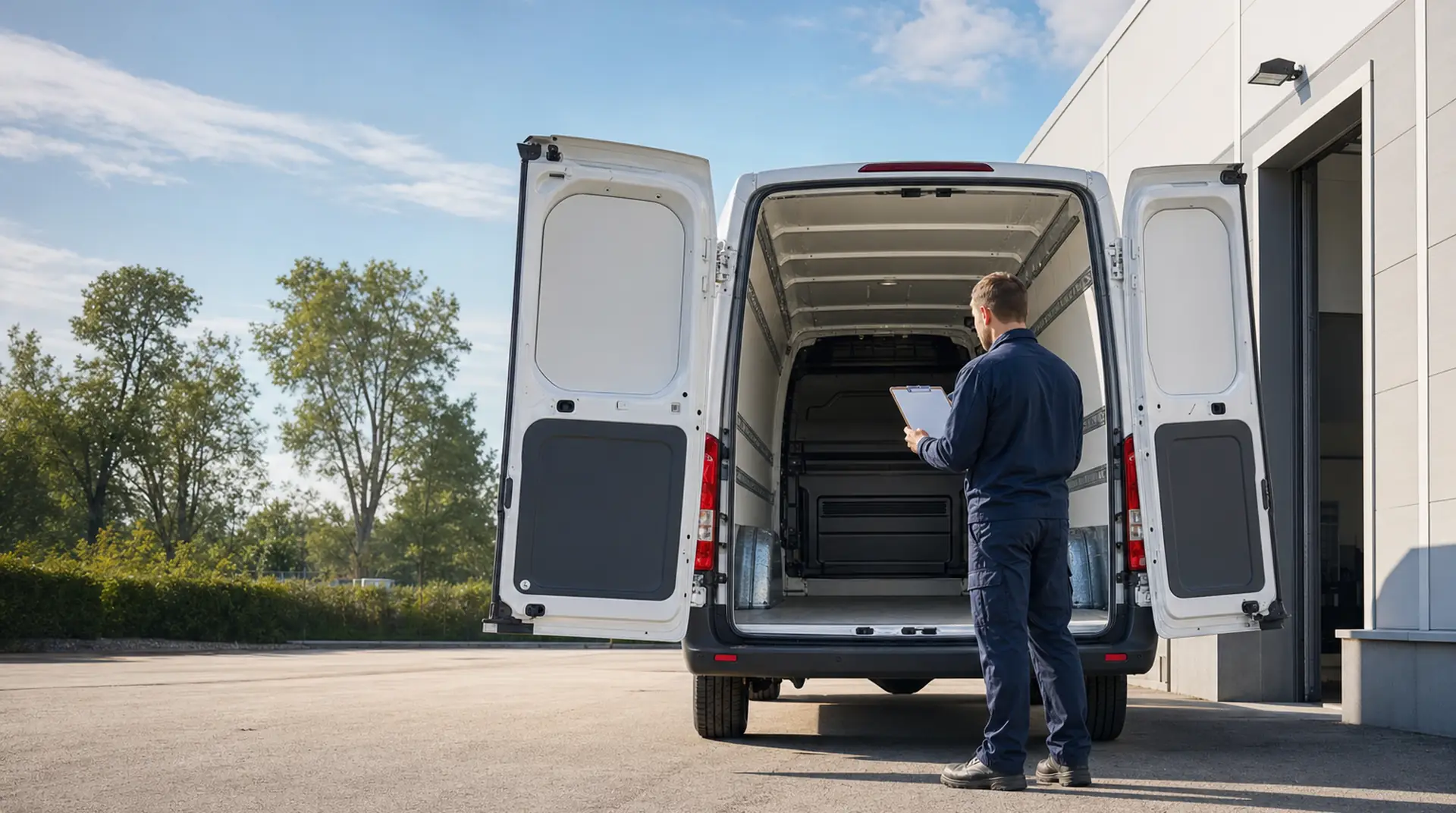
The four classes used in expedited freight carry 2,500, 5,000, 10,000 and 26,000 pounds. Those numbers decide which loads you are eligible for, and eligibility - not horsepower - is what determines how often your phone rings.
What weight can each class carry?
At Starbriges the limits are straightforward. Cargo vans carry up to 2,500 pounds and suit smaller, time-critical loads. Sprinters are slightly larger, up to 5,000 pounds. Box trucks handle medium-sized freight up to 10,000 pounds. Straight trucks are the largest vehicles we work with, at up to 26,000 pounds.
Read those as ceilings on what we can offer you, not as targets. Your usable payload is the class limit minus your own equipment, your fuel, and anything permanently mounted in the back - and a driver who quotes the brochure figure rather than the real one eventually turns up to a load they cannot legally take.
Which class gets the most freight?
Different freight, not more of it.
Van-sized loads are frequent and small: a pallet or two, a critical part, a same-day run. Box and straight trucks see fewer postings but each one is worth more. So a van driver’s risk is being underpriced by the next van driver, and a straight-truck driver’s risk is a quiet week.
There is no class that is simply better. There is a class that matches how much variance you can absorb between good weeks and slow ones.
Where does the 10,001-pound line fall?
This is the most consequential number in the comparison, and it is not a Starbriges rule - it is federal.
49 CFR 390.5 defines a commercial motor vehicle as one rated at 10,001 pounds gross vehicle weight rating or more. Cross that line and a different set of federal rules applies to the vehicle and to you. Stay under it and much of that framework does not reach you.
Most cargo vans sit below the line. Box trucks and straight trucks sit above it. Sprinters straddle it depending on configuration, which is exactly why Sprinter owners get contradictory answers online - both sides are describing a real vehicle, just not the same one.
Check the sticker in your driver’s door jamb. That rating, not the weight of the van and not the payload, is what decides which side you are on.
What does each class cost to run?
Cost scales with the class, and so does the freight, but not always at the same rate.
A cargo van is the cheapest way into the business: lowest purchase price, ordinary fuel consumption, ordinary tyres, and maintenance that most independent shops can handle. A Sprinter costs more to buy and more to service, and parts can take longer to arrive. Box and straight trucks bring commercial tyres, commercial insurance, higher fuel burn, and a repair bill where every line item is larger.
The trap is judging a class by its rate per mile. A straight truck earning a much better rate also spends much more per mile and loses more money per day when it sits. Compare classes on what is left after costs across a full month, including the weeks that went badly.
Which class should you buy?
Work backwards from the freight, not from the vehicle.
If you want to start with the least capital at risk and learn the business, a cargo van does that better than anything else, and you can be earning quickly. If you already know your lanes and your customers regularly hand you freight your van cannot take, a Sprinter or box truck is a response to demand you have actually observed. If you are looking at a straight truck, you should be able to describe the specific freight that will fill it before you sign.
Buying a bigger vehicle in the hope that bigger freight will follow is the most common and most expensive mistake in this business. Capacity you cannot fill is a payment you make every month for nothing.
What can you haul with each class?
At Starbriges all four classes run the same book of business: expedited freight, LTL, same-day delivery, airport recovery, and cross-border freight, across 48 states. What changes with your class is which of those loads you are eligible for and how often they appear.
That is worth knowing before you buy. If the freight you want is mostly single-pallet and time-critical, a larger truck does not get you more of it - it gets you a bigger payment and the same loads.
Frequently asked questions
What is the weight limit for a box truck?
With Starbriges, box trucks carry up to 10,000 pounds. Straight trucks carry up to 26,000.
What is a Sprinter van’s weight capacity?
Up to 5,000 pounds with us, compared with 2,500 for a standard cargo van.
Is a box truck better than a cargo van for an owner-operator?
Not better - different. Box trucks earn more per load and see fewer loads, cost more to run, and cross the federal 10,001-pound commercial motor vehicle threshold. Vans are cheaper to enter and compete on speed.
Do I need a CDL for these vehicles?
Not for cargo vans and Sprinters. CDL requirements depend on gross vehicle weight rating and on your state, so confirm against your door-jamb sticker and your state’s rules before you buy a straight truck.
Do all four classes need MC authority with Starbriges?
Yes. We partner with active carriers who hold both their own truck and their own MC authority, whatever they drive.
Not sure which class fits your lanes?
Talk to someone who sees what is actually moving in your markets. Weekly direct deposits. Call +1 (980) 981-4749.