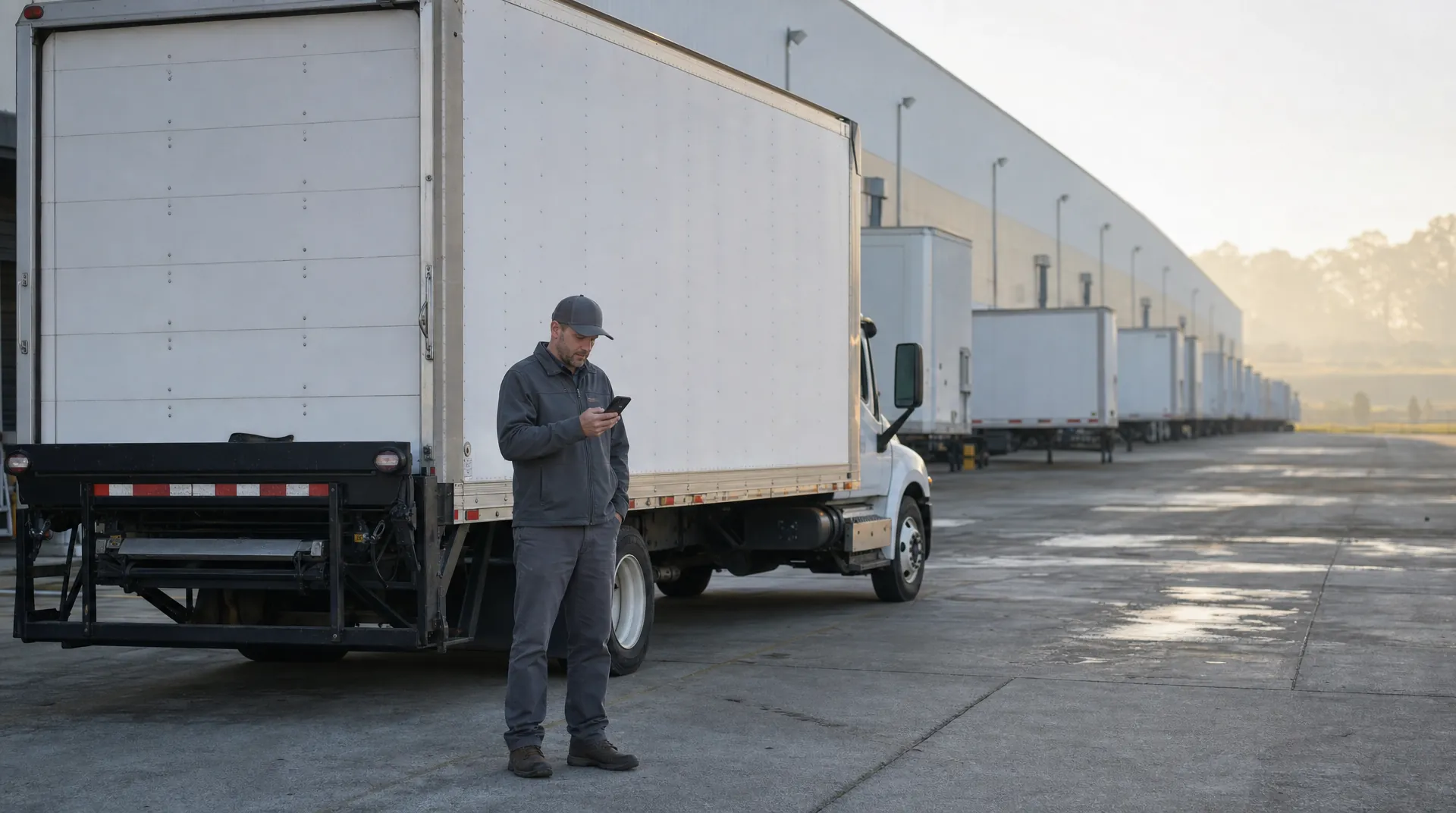
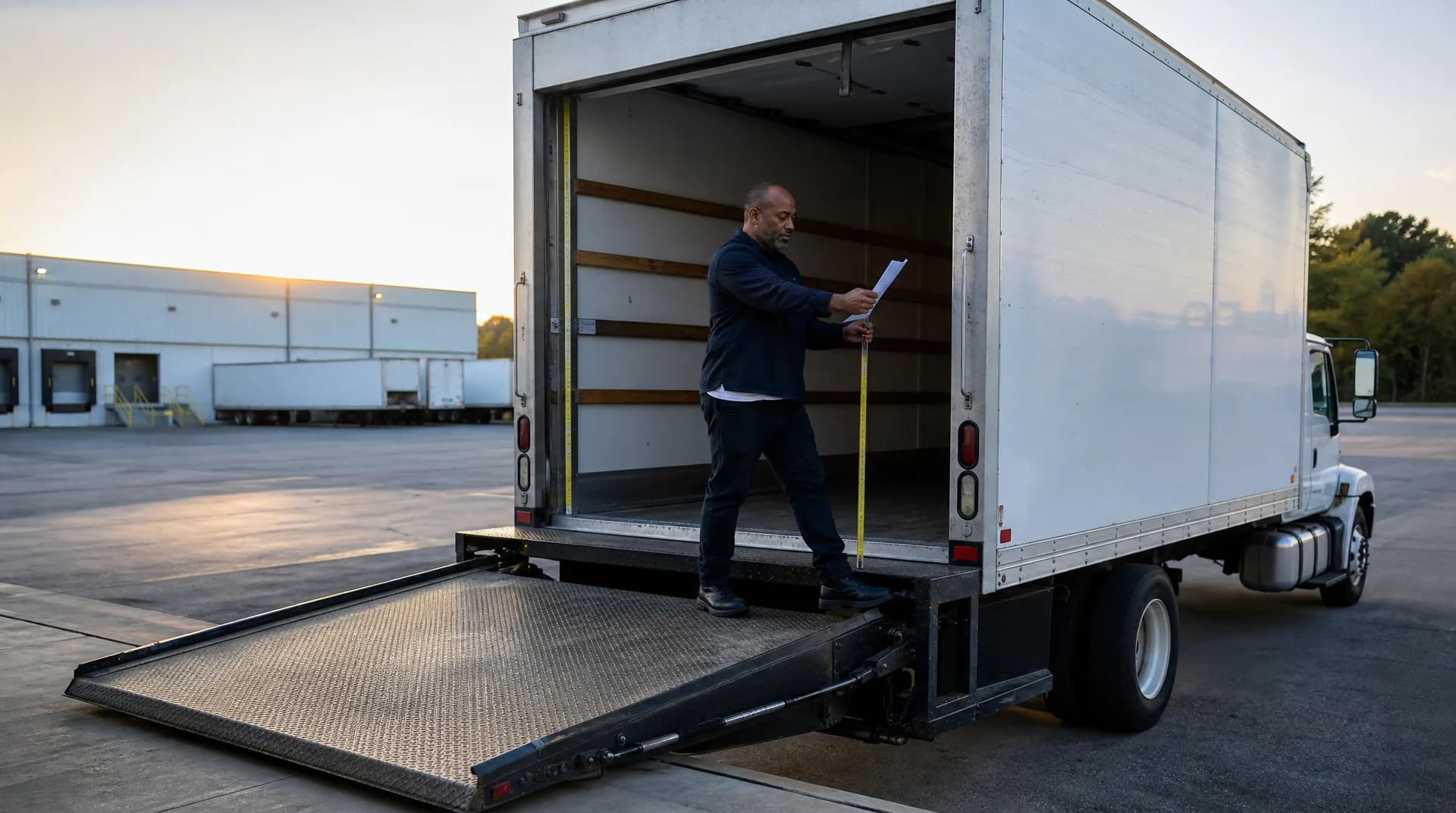
When you run a box truck under your own MC, you are the motor carrier, and the insurance is yours to buy, file and keep in force. Federal rules set one number for a general freight box truck: $750,000 in public liability. Brokers and carriers set the rest, and the ones we checked ask for more. This guide covers what the rules require, what brokers actually ask for before your first load, and which choices move your premium.
It is written for box truck owners getting ready to leave a lease or a carrier’s authority and run their own.
Who has to carry the insurance under your own MC?
You do. The rule is short: no motor carrier may operate a motor vehicle until it has the minimum financial responsibility in effect (49 CFR 387.7). On someone else’s authority that was their problem. On yours, four things follow from it:
- The endorsement is in your exact name. The federal liability endorsement, Form MCS-90, has to be issued in the exact name of the motor carrier (49 CFR 387.15). If your MC is in an LLC’s name, the policy has to match it, not your personal name.
- Proof stays at your place of business. The MCS-90 is the proof, and it has to be kept at your principal place of business and shown on reasonable request (387.7).
- Coverage is continuous. The policy stays in effect until it is terminated, and either side cancels by giving 35 days’ notice in writing (387.7).
- Your insurer files with FMCSA. Your authority is not issued, and does not stay in force, unless your insurer’s filing is on file with FMCSA (49 CFR 387.301T). How that filing works and how to keep it current is in keeping your authority active.
What is the federal minimum for a box truck?
For a for-hire carrier hauling nonhazardous property in interstate commerce, in a vehicle with a gross vehicle weight rating (GVWR) of 10,001 pounds or more, the minimum public liability is $750,000 (49 CFR 387.9). Hazardous materials carry higher minimums in the same table, $1,000,000 or $5,000,000 depending on the material.
Your truck’s GVWR is printed on the manufacturer’s certification label on the driver’s door or door frame. Read it rather than guess. A fleet made up only of vehicles under 10,001 pounds GVWR files at a lower level, $300,000 for nonhazardous property (49 CFR 387.303T), so the label decides which line you are on.
Two things the federal minimum does not cover. It is public liability: injury to other people and damage to their property. It is not cargo insurance. The federal cargo filing in the same rules applies to household goods carriers (387.303T), not to general freight. The cargo limit you carry is set by the brokers and carriers you haul for.

Own your truck and your MC?
StarBriges works with cargo van, Sprinter, box truck and straight truck owner-operators who run under their own authority. Send us your MC and truck details. We’ll review them within one business day.
Apply to run with StarBriges →Which coverages does a box truck under its own MC need?
| Coverage | What it pays for | Who requires it |
|---|---|---|
| Auto liability (primary) | Injury and property damage you cause to others while operating the truck | Federal rules ($750,000 minimum); every broker in the table below asks for $1,000,000 |
| Motor truck cargo | Loss of or damage to the freight you are hauling | Not a federal filing for general freight; every broker in the table below asks for $100,000 |
| General liability | Claims that are not about driving the truck, such as damage at a customer’s dock | Some brokers: Arrive Logistics lists $1,000,000 |
| Physical damage | Repair or replacement of your own truck | Not required by FMCSA or the brokers below; check your loan or lease contract if the truck is financed |
Auto liability and cargo are the two every broker setup we checked names. General liability shows up on some lists and not others. Physical damage is about protecting your own truck, so whether you need it is between you and whoever holds the title.
What do brokers and carriers ask for before your first load?
These are the setup requirements five brokers and carriers list for new carriers. Arrive Logistics publishes them on its own carrier page. The other four are as TrueNorth’s broker setup pages report them, which note that brokers can change requirements over time. All were checked on November 2, 2026.
| Broker or carrier | Authority age | Auto liability | Cargo | Also listed |
|---|---|---|---|---|
| Arrive Logistics | 365+ days | $1,000,000 | $100,000 | $1,000,000 general liability; safety rating Satisfactory or none |
| Schneider | 270 days | $1,000,000 | $100,000 | Insurer rated B+ or better by A.M. Best |
| Knight-Swift | 90 days | $1,000,000 | $100,000 | Safety rating Satisfactory or none |
| Ryder | 60 days | $1,000,000 | $100,000 | Safety rating Satisfactory or none |
| Uber Freight | 0 days | $1,000,000 | $100,000 | Safety rating Satisfactory or none |
Three things stand out for a box truck owner starting out:
- $750,000 keeps you legal, $1,000,000 gets you set up. All five ask for $1,000,000 in auto liability. If you buy only the federal minimum, you will not pass these setups.
- Authority age is a separate gate. In this table it runs from 0 to 365 days. Insurance at the right limits does not get a brand new MC past a 270 day requirement, so plan your first months around the ones that accept new authority.
- Who insures you can matter. Schneider’s listed requirement is about the insurer’s A.M. Best rating, not just the limits. Ask your agent for the rating of the company writing your policy before you sign.
A carrier you run with can ask for its own limits and paperwork on top of this. Get every requirement in writing before you sign, as we cover in box truck owner-operator jobs.
What drives the cost, and which parts you control?
This guide does not quote premium figures. We have no published source for box truck premiums we would put our name to, and a real quote depends on your own record and operation. The factors insurers price on, from your radius and driving record to how long your business has been running, are covered in our van and Sprinter insurance guide and apply to a box truck as well.
What you choose, and can compare quote against quote:
- The liability limit. $750,000 versus $1,000,000. Price both, then look at the broker table above before you pick the cheaper one.
- The cargo limit. $100,000 is the number on the setups we checked. A box truck holds more freight than a van, so ask what it costs to go higher, and ask the carrier or broker what happens to loads worth more than your limit.
- Physical damage value and deductible. The value you insure the truck for and the deductible you choose both change this part of the quote.
- General liability. Price it separately, so you know what it adds and can decide if the brokers you plan to work with need it.
When you collect quotes, give every agent the same limits, the same truck details and the same radius. Otherwise you are comparing different policies, not different prices. If your truck has a liftgate, ask each one whether cargo damaged while loading or unloading is covered.
Frequently asked questions
Is $750,000 enough to haul freight under my own MC?
It meets the federal minimum for a for-hire box truck rated at 10,001 pounds GVWR or more hauling nonhazardous freight (387.9). It does not meet the $1,000,000 auto liability that every broker in our table asks for at setup.
Do I need cargo insurance if FMCSA does not require it?
FMCSA’s cargo filing applies to household goods carriers. For general freight, the requirement comes from the brokers and carriers you haul for, and every one in our table asks for $100,000.
Can I buy insurance before my authority is granted?
You have to. Your authority is not issued until your insurer’s filing has been accepted by FMCSA (387.301T). The full sequence is in getting your own authority.
What happens if I switch insurers?
The old policy stays in force until it is terminated, and cancellation takes 35 days’ written notice from either side. A replacement policy can take its place, and the old insurer’s liability ends when the new policy takes effect or at the end of the 35 days, whichever comes first (387.7). Line up the new policy before the old one ends so there is no gap.
Does StarBriges work with box truck owner-operators?
Yes. StarBriges works with cargo van, Sprinter, box truck and straight truck drivers, and currently partners with active carriers who have both their own truck and MC authority. If your insurance and authority are in place, see how to run with StarBriges.