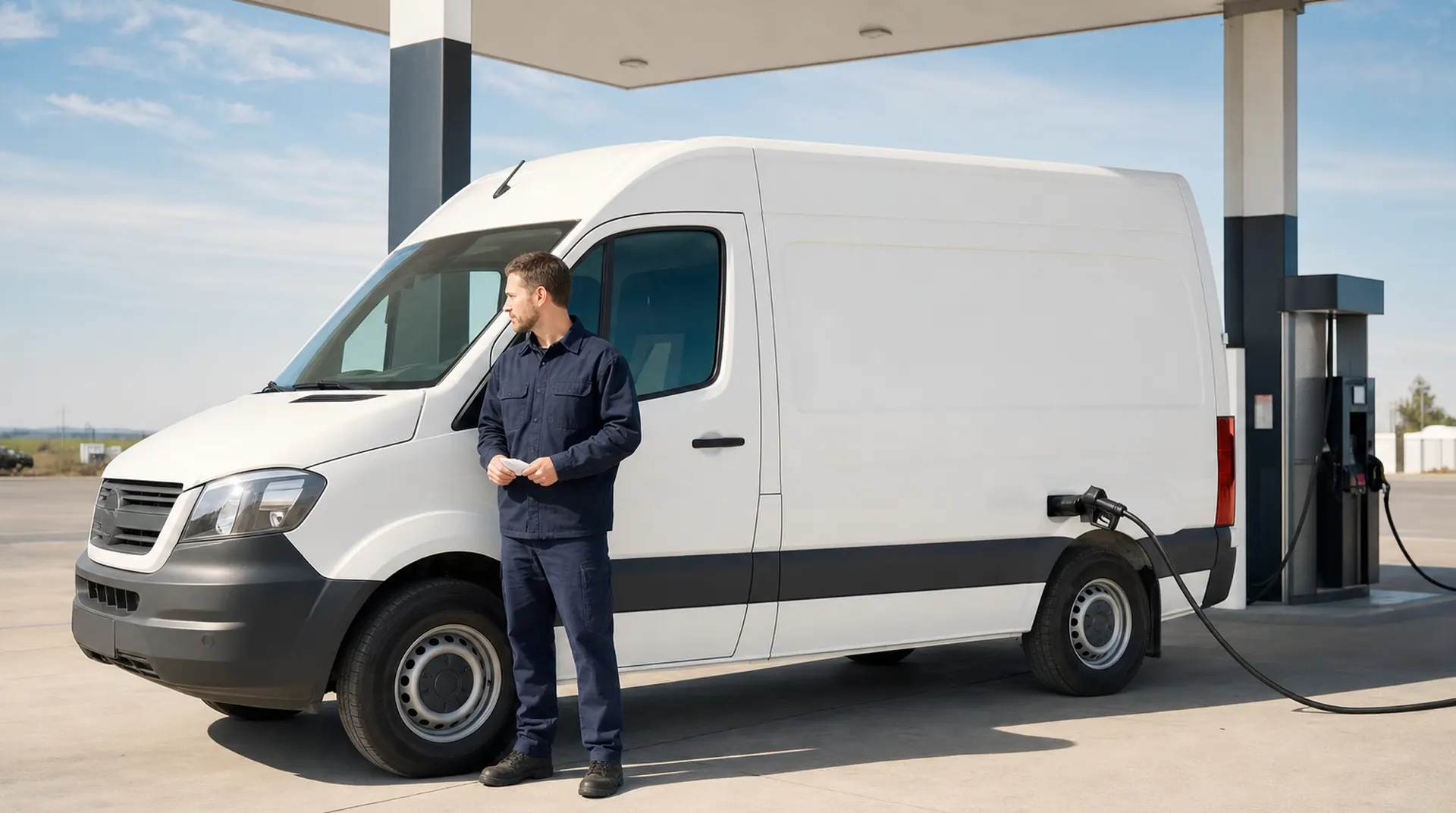
You need four things before anyone will put freight in your van: operating authority in your own name, active insurance a carrier will accept, a van that meets the carrier’s spec, and a partner who actually has loads. The paperwork side takes days, not months. What takes longer is picking who you run for.
What does a cargo van owner-operator need?
Start with the four items above, in that order. Authority and insurance are gates - without them your application does not get read. The van is a spec question, not a brand question. The freight partner is the only one of the four you can change later without re-filing anything, so it is worth being slow about.
Everything else people worry about early - a business bank account, an ELD, a fuel card, an LLC - is either optional at your size or something you can add in an afternoon once you are moving.
Is a cargo van a commercial motor vehicle?
Usually not, under the federal definition. 49 CFR 390.5 defines a commercial motor vehicle as one rated at 10,001 pounds gross vehicle weight rating or more. Most standard cargo vans are rated below that line. Most Sprinter and box-truck configurations used in expedite are above it.
Do not guess which side you are on. The rating is printed on the sticker inside your driver’s door jamb - that number, not the empty weight and not the payload, is what decides whether the federal safety rules apply to your vehicle. Drivers get this wrong constantly, because a van that weighs 6,000 pounds empty can still carry a 9,500-pound rating.
If you are under the line, the federal driver and vehicle rules built around that definition generally do not reach you. If you are over it, they do, and your obligations change substantially. Your state may also have its own intrastate rules that start lower.
Do you need MC authority for a cargo van?
Two different answers, and mixing them up is what causes most of the confusion online.
Legally, a van under the 10,001-pound rating running for hire often falls outside the federal registration requirement that is keyed to that definition. This is exactly why so many cargo van drivers run without an MC number and tell you online that you do not need one.
Contractually, it is a different story. Many expedited carriers will not sign an owner-operator who does not hold authority, regardless of what the vehicle weighs. StarBriges is one of them: we partner with active carriers who have both their own truck and their own MC authority. That is a firm requirement, not a preference.
So the honest answer is: you may not need authority to be legal, and you will very likely need it to get the better freight. Decide based on who you want to haul for, not on the minimum the law allows.
What insurance do carriers ask for?
Expect to carry commercial auto liability and cargo coverage at minimum, and expect the carrier to want to be listed on the certificate. Many owner-operators also carry occupational accident coverage, since as an independent contractor you are not on anyone’s workers’ compensation.
Required limits vary by carrier and by the commodity you haul - a partner moving pharmaceutical or high-value electronics freight will ask for more cargo coverage than one moving pallets of industrial parts. Ask your prospective partner for their exact requirements before you buy a policy. Buying first and discovering your cargo limit is half of what they need is an expensive and completely avoidable mistake.
Which policies you actually need, what each one covers and what moves the premium is a longer answer than this section can hold - it is written up separately in cargo van and Sprinter insurance: what carriers require.
What kind of van actually gets loaded?
A van gets loaded when its numbers can be trusted. For StarBriges, cargo vans carry up to 2,500 pounds; Sprinters carry up to 5,000. Know your real payload after your own weight, your tools, and a full tank, because that is the figure we are working from.
Beyond capacity, the things that get you loaded again are unglamorous: a clean, dry, odour-free cargo area, a working load bar or e-track so freight does not shift, a moving blanket or two, a pallet jack if you can lift one in and out, and a phone that holds a charge for a full day. Some freight also requires a hand truck or a liftgate. Ask what your lanes typically move before you spend money on equipment you will not use.
How fast can you actually start?
Faster than most people expect, if your documents are already in order. With StarBriges you can be on the road within 24 hours.
The bottleneck is almost never the carrier. It is a driver waiting on an insurance certificate or an authority that has not gone active yet. Get those two moving first and the rest is a short form.
Frequently asked questions
Do I need a DOT number for a cargo van?
It depends on your vehicle’s gross vehicle weight rating and on your state. The federal commercial motor vehicle definition in 49 CFR 390.5 starts at 10,001 pounds, and many cargo vans are rated below it - but several states set their own lower thresholds for intrastate work. Check your door-jamb sticker, then check your state.
Do I need my own MC authority to run with StarBriges?
Yes. We currently partner with active carriers who have both their own truck and their own MC authority.
Is being a cargo van owner-operator worth it?
It depends almost entirely on how much of your week is loaded miles rather than empty ones. The van itself is cheap compared with a tractor, so the barrier to entry is low - which also means the difference between drivers is not equipment, it is freight quality and deadhead.
What weight can a cargo van carry?
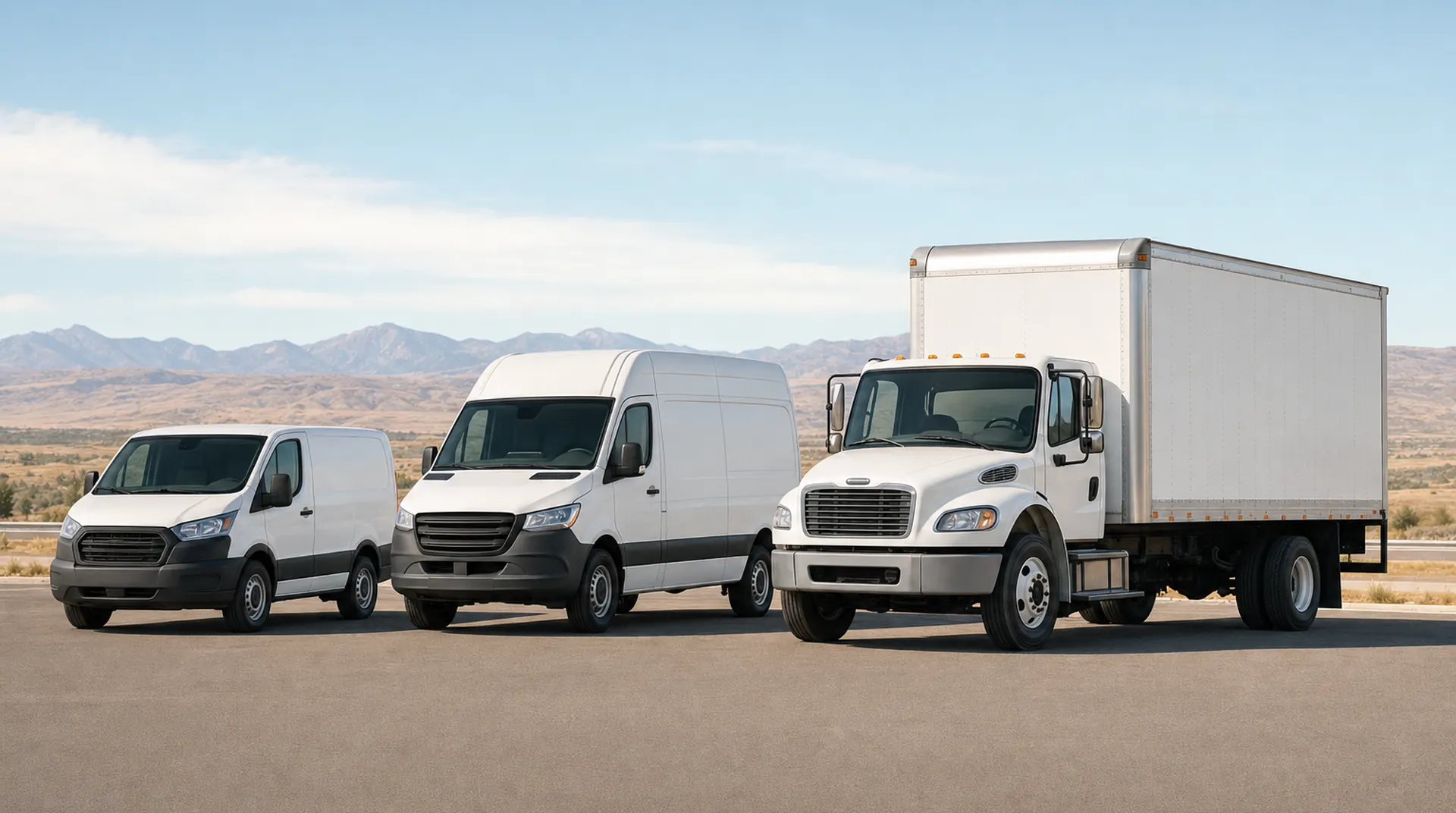
With StarBriges, up to 2,500 pounds. Sprinter vans carry up to 5,000 pounds, box trucks up to 10,000, and straight trucks up to 26,000.
How long does approval take?
You can be on the road within 24 hours.
Ready to put your van to work?
Apply online in a minute and start hauling. Weekly direct deposits, no forced loads, and 24/7 support on the road. Call +1 (980) 981-4749.